



December 08, 2015
Think of a shed and objects like spades, forks and compost in a wooden hut at the end of the garden come to mind.
However, in the UK, some very old hardware is being brought back to life in some of those scruffy, but often well-organised, workspaces. In them, a group of veteran engineers is toiling to help recreate the pioneering Edsac computer.
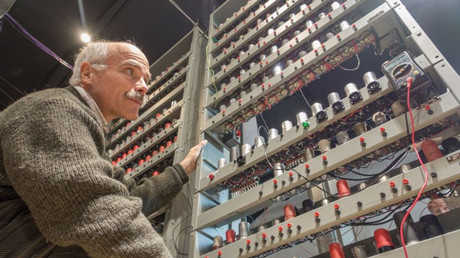
Designed by Sir Maurice Wilkes, Edsac first ran in 1949 and was made to serve scientists at the University of Cambridge. It helped them push the boundaries of their disciplines by giving them a tool that could crunch numbers faster than they could ever manage. "The problems they were tackling were not practical using hand-based calculation methods," said James Barr, one of the veterans reconstructing the Electronic Delay Storage Automatic Calculator. Edsac quickly proved its usefulness and helped two Cambridge scientists win Nobel prizes. Instruction set
But while the science was meticulously recorded, the building of Edsac was not. "Wilkes was exposed to electronics and valves during his wartime work on radar and to the mercury delay lines it used for memory," said Mr Barr. "He had the technology in his head that he thought he could realise." Wilkes' design for Edsac have been largely lost and, even if they could be found, that might not have helped because the machine changed as it was being built.
"It took me a year to understand its five-bit order code," said Mr Barr. But understand it he did and his insights, along with those from fellow engineers who have worked on other key parts of the machine, has helped the project recreate Edsac's innards.
Posted by: angelina at
08:39 AM
| No Comments
| Add Comment
Post contains 443 words, total size 4 kb.
35 queries taking 0.0242 seconds, 81 records returned.
Powered by Minx 1.1.6c-pink.

