



January 28, 2016
With the speed in the data center now increases from 10G to 40G, different optical technology and cabling are required. But at first we should figure out the design of 40G Ethernet network. There are several key factors that may affect the transition to 40G. This article today will pay special attention to those aspects that influence data center design consideration.
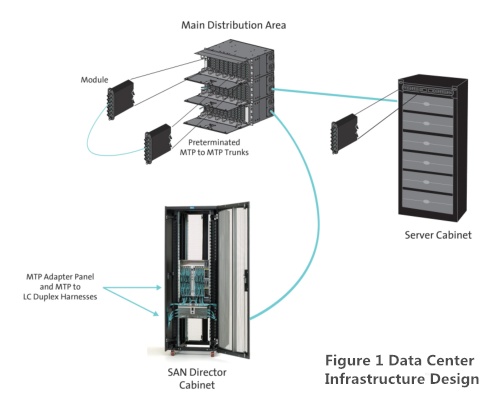
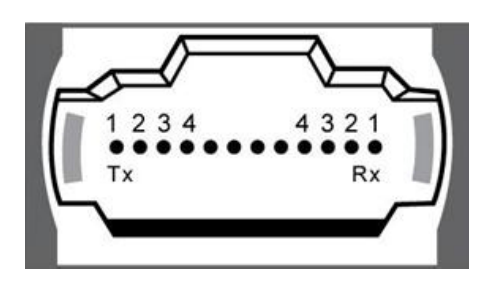
The MPO is defined by TIA-604-5-C, Fiber Optic Connector Intermateability Standard. Type MPO (FOCIS-5) as an array connector that can support up to 72 optical fiber connections in a single connection and ferrule. While the MPO is versatile in the fiber count supported, the 12-fiber MPO is the version widely deployed. Many data center designs today use cassette-based duplex LC connectivity or MPO to duplex LC harnesses at the electronics interface, while 12-fiber MPO-based connectivity is used to connect the trunk cabling to each cassette or harness.
-
40GBASE-SR4 (parallel optics)
100m on OM3/125m on OM4—10G on four fibers per direction
- 40GBASE-LR4(cWDM)
10km on single-mode fiber—4x10G 1300nm wavelength region
- 40GBASE-CR4
7m over copper—4x10G (twinax copper)
- 40GBASE-FR(Serial)
2km on single-mode—4x10G 1550nm
As noted above, the QSFP+ module is specified for use with different standard. The 40GBASE-SR4 is terminated with the MPO connector. For example, CiscoQSFP-40G-SR4QSFP+ transceiver enables high-bandwidth 40G optical links over 12-fiber parallel fiber terminated with MPO/MTP multifiber female connectors.
For 12-fiber MPO cassette-based optical systems already installed, 40G migration is as simple as removing the existing cassette from the patch panel housings at the equipment and cross connects and replacing the cassette with an MPO adapter panel. Next, an appropriate 12-fiber MPO jumper would be used to cross-connect the trunk cabling as well as interconnect into the QSFP. Though not widely available currently, future preterminated system trunks may utilize 24-fiber MPO connections, both on the trunks and on the cassette. In this case, 40G deployment would require an interconnect harness terminated with two 12-fiber MPO connectors at the QSFP end, and one 24-fiber MPO at the trunk end. This would provide the needed interface with the 24-fiber MPO-based trunk and the 40G QSFP. A 24-fiber MPO jumper would be needed at the system cross connects to ensure polarity was maintained and that skew was within requirements.
Posted by: angelina at
02:43 AM
| No Comments
| Add Comment
Post contains 675 words, total size 7 kb.
35 queries taking 0.0576 seconds, 81 records returned.
Powered by Minx 1.1.6c-pink.

